 Welcome to Single Games Arena
Welcome to Single Games Arena
Welcome to Single Games Arena
Watch Out, 2048 Is Addictive: The Number Puzzle That Hooked You Returns to Single Games Arena.


Do you love puzzles that combine strategy with simple math? The classic 2048 is the game that will test your logic and foresight on a grid.
You play on a grid where tiles with numbers appear (always powers of 2, starting with 2). Your mission is to slide the tiles in four directions (up, down, left, or right). When two tiles with the same number collide, they merge into a single tile with the sum of both numbers (for example, two tiles of 2 become one tile of 4).
The main goal is to reach the famous 2048 tile before the board fills up and you can’t make any more moves. However, the real challenge is to go beyond...
On Single Games Arena, every time you merge tiles, you earn points. The higher the number on the tile you create, the more points you get! The ultimate challenge is to achieve the highest possible score before the game ends, competing against your own saved record thanks to the app’s system.
| Pos | Date | User | Score |
|---|---|---|---|
| 10/18/2025 | EB | 80,592 | |
| 10/11/2025 | DCQ | 75,716 | |
| 10/21/2025 | ED | 69,012 | |
| 10/24/2025 | KP | 67,524 | |
| 10/21/2025 | KP | 66,416 |
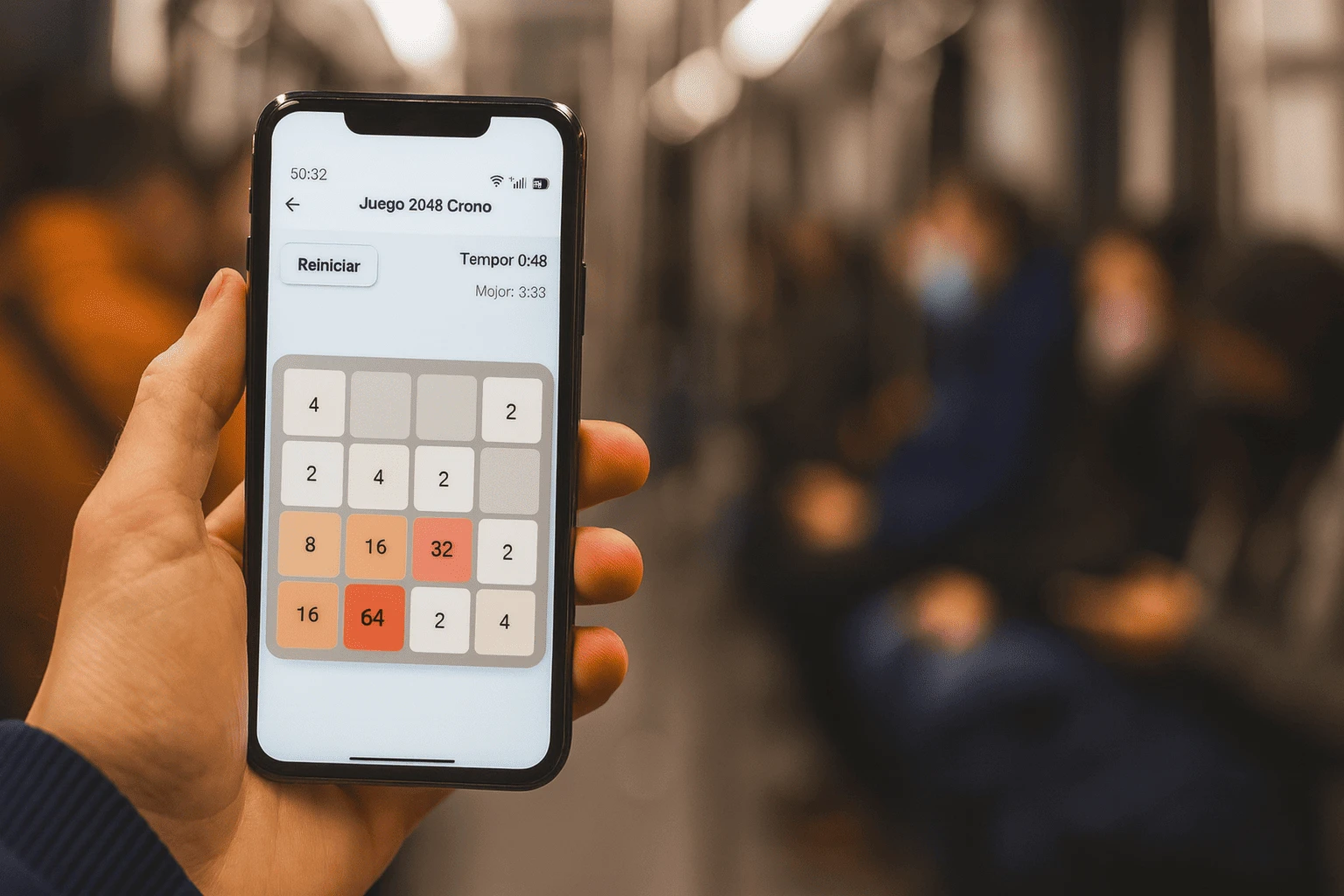
If pressure motivates you, 2048 Crono is your battlefield. This exclusive variant on Single Games Arena turns the puzzle into a thrilling speed challenge.
Unlike classic 2048, where the focus is on scoring, in 2048 Crono the goal is to reach the 2048 tile in the shortest possible time.
The app records your best time for achieving 2048. Every millisecond counts! Challenge your friends in a competition and see who is the fastest master of number merges.
2048 is a game of spatial vision and patience. While luck plays its part with the appearance of the tiles, the only way to consistently reach the 2048 tile (or beyond) is by applying a rigid board organization strategy.
The first and most important piece of advice is to designate one of the four corners (e.g., bottom-left) to be the home of your highest value tile. Once you get your biggest tile to reside there, your main priority will be to keep it immobilized in that position.
This forces you to primarily use only two swipe directions (e.g., Left and Down if you chose the bottom-left corner), compelling the rest of the board to organize itself around that main "wall". The key is to never swipe in a direction that moves your main tile.
Once the highest value tile is in the corner, the next largest tiles must align along the adjacent wall in decreasing order (like a ladder or snake). For example, if you have 1024 in the corner, 512 must go just above it, then 256, and so on. This arrangement guarantees that every new merge can be "pushed" toward the highest value tile without having to disorganize your main structure.
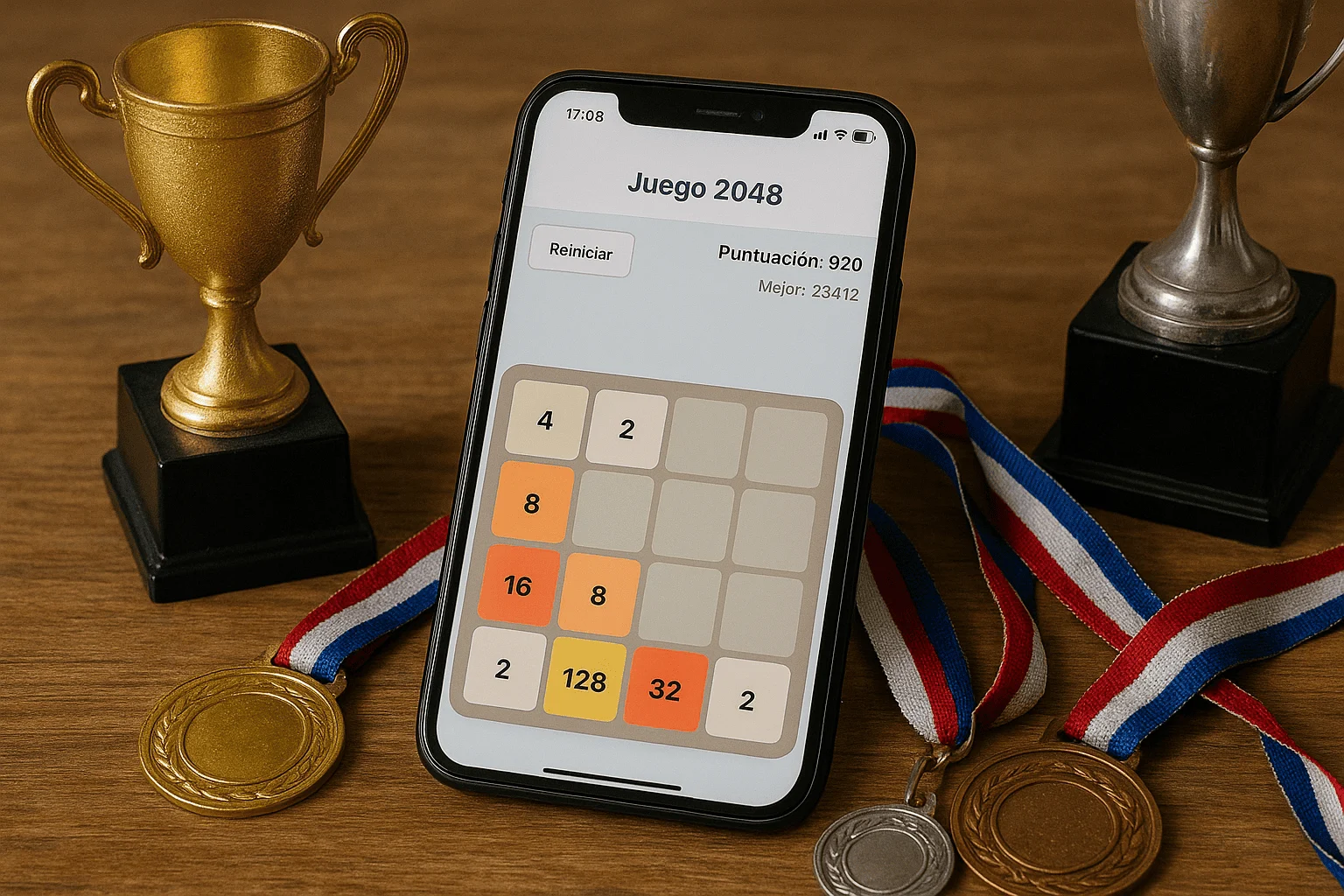
For those who already master the corner strategy, the next step is managing chaos and speed, crucial for reaching the 4096 and 8192 tiles, or for succeeding in the challenging 2048 Crono mode.
The main problem in advanced play is the appearance of a low-value tile that breaks the descending sequence of your "Snake". An advanced player does not get frustrated, but rather uses these "bricks" to restructure. Isolate the problematic tile and focus on building another of the same value in the open area of the board so you can merge them and bring the result into the main sequence, restoring the pattern as soon as possible.
Never make a move just because you can. Before swiping, ask yourself: What is the worst possible outcome of this move (where could the new 2 or 4 tile appear)? The goal is not to merge, but to free up the maximum number of cells safely. In advanced phases, having space is more valuable than a small merge, as it gives you flexibility to maneuver and recover from complex situations.
In 2048 Crono mode, the corner strategy is too slow. The best tactic is the "Two-Direction Movement Strategy". Prioritize two orthogonal movements (e.g., Up and Down, or Left and Right) and use them frantically to maximize merges per move, aiming to clear the central board quickly. The risk of filling the board is higher, but the time saving is essential to set the best record.