
Sudoku is one of the most popular logic puzzles in the world, but also one of the most misunderstood. Many players approach it as a simple trial and error exercise, when in reality it is a game of pure deduction.
In this guide, you will not only learn concrete tricks, but something more important: how to think a Sudoku. The goal is for every number you place to have a clear reason behind it, eliminating errors and blocks.
1. Sudoku as a logic exercise (not intuition)
One of the first barriers any player must overcome is letting go of intuition. In Sudoku, the phrase “I think this number goes here” is synonymous with a future problem.
Every correct move is always supported by the same three restrictions:
- A number can only appear once per row.
- Once per column.
- And once per 3x3 block.
Solving a Sudoku consists of crossing these rules until only one possible option remains. When you internalize this approach, the game stops being chaotic and starts to feel controlled.
2. Systematic scanning: the basis of any good game
One of the most common mistakes is looking at the board without order, jumping from one area to another without a clear criterion. Scanning must be structured and repeatable.
A good habit is to go through complete rows, columns, or blocks and ask yourself which numbers are missing. When an area only admits one valid option, that number is certain.
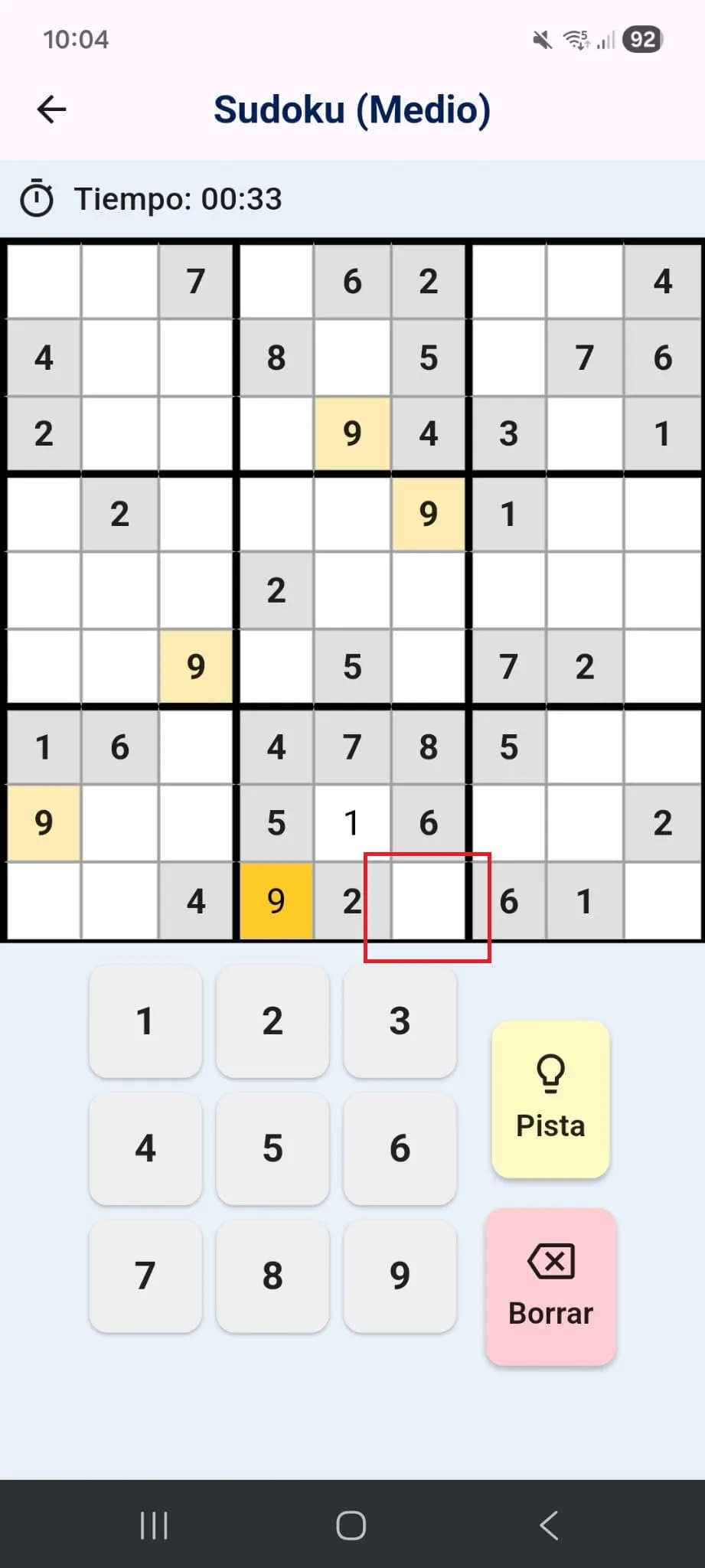
3. Think by numbers, not by cells
Beginner players usually obsess over a specific cell. Advanced players do exactly the opposite: they choose a number and look for it across the board.
By focusing on a single number, you can quickly see which blocks it's already placed in and in which it is missing. By combining row and column exclusions, unique locations appear much more easily.
This approach not only speeds up the resolution but also reduces mental load and avoids prolonged blocks.
4. Mental candidates and working memory
Although some versions of Sudoku allow noting candidates, developing the capacity to retain options mentally is a key skill.
Thinking “only a 4 or a 9 can go here” and continuing to play until one of those options is discarded is an example of advanced reasoning. This type of chained deduction turns Sudoku into a true cognitive workout.
5. The power of logical chaining
A good move rarely stays isolated. Placing a correct number usually unlocks other moves immediately: it completes a row, reduces options in a block, or forces a new placement.
When you detect a chain of deductions, do not interrupt it. Follow that logical thread until it is exhausted before changing areas. It is one of the most efficient ways to advance.
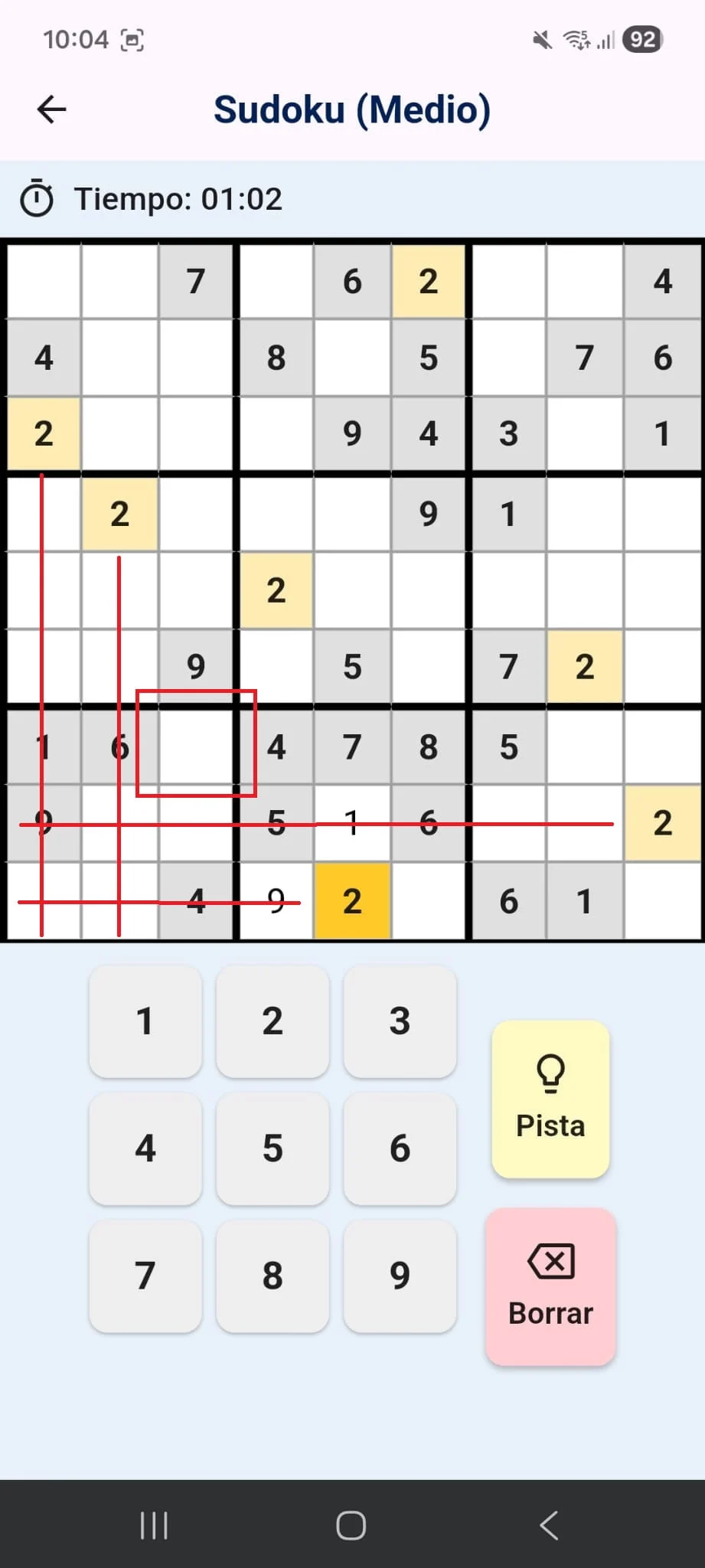
6. 3x3 Blocks: small Sudokus within the Sudoku
Each 3x3 block can be analyzed as an independent puzzle. Blocks that already contain six or seven numbers usually offer quick solutions.
Mastering these blocks not only allows you to close them easily but also generates valuable information for the rows and columns that pass through them.
7. How to manage mental blocks
Even experienced players get stuck. The difference is in how they react.
When you feel you are not making progress, change your focus: try another number, review a different block or re-scan almost complete rows. Many solutions appear right after abandoning the problematic cell.
8. Absolute precision: the rule you must never break
In Sudoku, a single mistake can ruin the entire game. Therefore, the rule is clear: only enter numbers when you are completely sure.
Solving a board slower but without failures is always more efficient than moving fast and having to restart.
9. Sudoku as mental training
Beyond entertainment, Sudoku improves key skills such as sustained concentration, working memory, and decision-making under pressure.
Every well-solved game reinforces your capacity for logical analysis, something that translates easily to other areas of daily life.
Conclusion: solve better, don't guess more
Mastering Sudoku is not a matter of innate talent, but of method and mental discipline. If you learn to scan with order, think by numbers, and respect absolute precision, your level will improve naturally.
And remember: every well-reasoned Sudoku makes you a slightly better player than the previous one.